
Online Seminar: Fundamentals of Temperature Measurement and Temperature Calibration
What you will learn in this seminar
Discover the world of temperature measurement and temperature calibration without any prior knowledge.
Basic seminar featuring virtual conferences and live videos from the calibration laboratory.
Who this seminar is for
Beginners
Are you new to the company and want to familiarize yourself with the topic of temperature measurement?
New to the department
Have you changed departments and calibrating thermometers is now part of your area of responsibility?
Career changers
Are you a career changer who wants to learn the basics of handling thermometers?
The seminar for beginners is aimed at participants who want to learn how to handle thermometers. Basic knowledge can be helpful but is not required. In addition to the fundamentals, you will learn the most important technical terms, how thermometers work, and how they are handled.
Advantages of the new online format
Virtual conference
In our seminar, you can actively participate. You can ask questions at any time and exchange experiences with others. We set up a virtual conference room for this purpose. It is therefore not a webinar where you only listen.
Live video
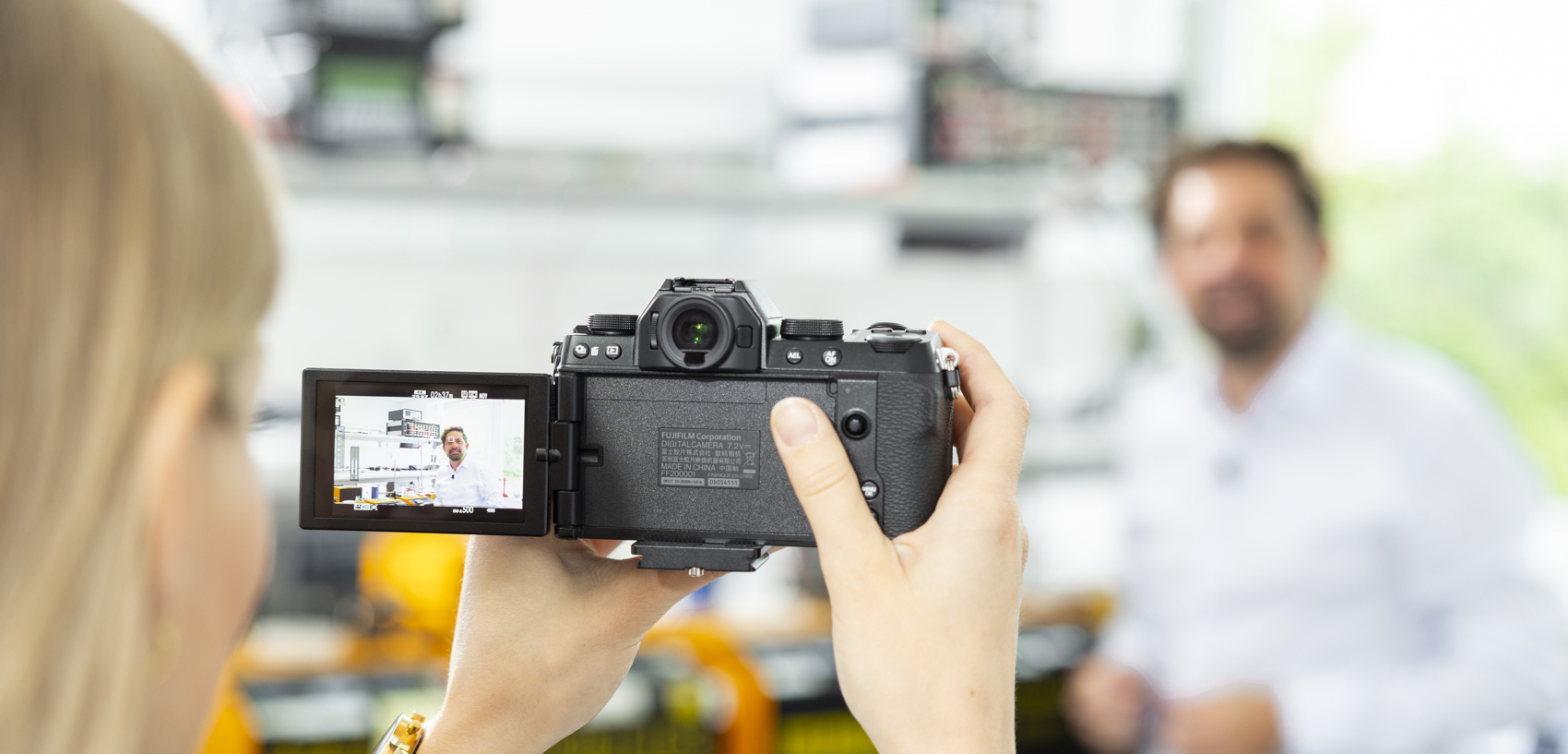
Look over the users’ shoulders! The practical implementation of the theory is shown via live video. We broadcast from our calibration laboratory and show you the technical implementation. You can ask questions at any time.
Klasmeier Connect
With group chat and direct messages, you can exchange ideas with participants and speakers, watch videos, and download PDFs in the KlasmeierConnect community.
Access remains available after the seminar.
Dates
Complete seminar in six online modules with live videos
24.02.2026, 26.02.2026, 03.03.2026, 05.03.2026, 10.03.2026, 12.03.2026
Tuesdays and Thursdays
10:00 AM – 11:30 AM
Price: €1,060
Registration deadline: 2026-02-04
How the online seminar works
The content is divided into six consecutive modules, each lasting approx. 90 minutes.
The individual modules consist of two parts. In the first 60 minutes, we provide you with the theoretical content in the form of virtual conferences. In the second part of the modules, we switch to our calibration laboratory via live video. Here you will see the practical implementation of the theory. There is an opportunity to ask questions and exchange ideas at any time.
And don’t worry if you can’t be there live on one of the dates: the modules – including the virtual conference and live video – are recorded and can be viewed again at any time via our Klasmeier.Connect community. Digital handouts are available for download as PDFs.
Seminar content
Module 1 – Fundamentals of Temperature Measurement Technology
After a brief introduction, we will explain the general fundamentals of temperature measurement technology and temperature calibration and introduce you to the most important standards and characteristic curves.
History of temperature measurement
The system of measurement
Temperature scales
Traceability pyramid
DKD-DAkkS guidelines for measurement and calibration
Module 2 – Everything about thermocouples!
Functional principle and basics (Seebeck effect)
Generation of thermoelectric voltage (temperature gradient)
Thermocouple reference junction
Thermocouple types
Measurement technology for thermocouples
Standards and definitions
After the theoretical part, we switch to the calibration laboratory and show the setup of a thermocouple measuring chain via live video. We clarify the different thermocouple types and their construction. We show how mini connectors and the thermocouple reference junction are related.
Module 3 – How resistance thermometers (such as Pt100) work.
PT100 and other sensor types
Design and construction of various sensor types
Two-, three-, and four-wire technology
Measurement technology for resistance thermometers
Standards and definitions
In the practical part of this module, we connect a resistance thermometer to a measuring bridge. We explain the different types of thermometers and show how they work. After explaining the difference between three- and four-wire technology, we use the ITS-90 characteristic curve function to convert the measured resistance values into temperatures.
Module 4 – Calibration of thermometers using the comparison method
Calibration setup
Performing a calibration
Sources of error in calibration
DKD guidelines for calibration
In the practical part, we show the setup of a calibration using the comparison method via live video. We use standard platinum resistance thermometers (SPRT) to calibrate industrial resistance thermometers to DAkkS level in the calibration bath.
Module 5 – Calibration of thermometers at temperature fixed points
Historical development of temperature fixed points
The current temperature scale
Setup of a fixed-point calibration
The most important temperature fixed points and their commissioning
The advantages and disadvantages of calibration at temperature fixed points
In the practical part of this module, we switch to our primary laboratory. We show the different types of temperature fixed points and how they are commissioned. Finally, we prepare a water triple point cell.
Module 6 – Calculation of measurement uncertainties in temperature – basic understanding
The result of a temperature measurement or temperature calibration always includes the specification of the associated measurement uncertainty. In this module, we explain the concept of measurement uncertainties, how you can handle them safely in your daily work, and how to avoid errors.
Basic understanding of probability theory and statistics
Measurement uncertainty according to GUM
The measurement uncertainty budget
Major contributions to measurement uncertainty
Your speakers

Thomas Klasmeier
Dipl.-Ing. (FH)
Thomas Klasmeier is the managing partner of the medium-sized company Klasmeier, based in Fulda. The company specializes in temperature measurement and temperature calibration, operates the DAkkS-accredited calibration service Klasmeier, and produces eXacal precision thermometers.

Boris Kalb
State-certified technician
Boris Kalb is the head of the Klasmeier calibration laboratory and is responsible for day-to-day operations in the temperature laboratory. He has gained over 15 years of professional experience at Klasmeier. As head of the calibration center, he regularly participates in the technical committee meetings of the DKD.

Optimally networked with Klasmeier Connect
Stay connected in the community after the online seminar
All seminar participants receive access to our Klasmeier Connect Community.
With group chat and direct messages, participants can exchange ideas with other participants and speakers before, during, and after the seminar, watch recordings, and download PDFs. Access remains available even after the seminar.
