

Online Seminar: Calibrating Thermometers
What You Will Learn in This Seminar
In this seminar, learn how to properly calibrate resistance thermometers and thermocouples.
We will show you how to meet all calibration requirements. We will discuss common errors and how to avoid them. The specialized knowledge gained and the exchange of experiences with participants and instructors will provide you with confidence for your daily work.
Complete Seminar in Eight Online Modules
We will discuss the fundamentals and execution of thermometer calibration
Calibrating Thermometers
Everything you need to know for calibrating resistance thermometers and thermocouples
Calibration Requirements
DAkkS and international
requirements for thermometer
calibration
Seminar Benefits
Virtual Conference
In our seminar, you can actively participate. You can ask questions at any time and exchange experiences with others. We set up a virtual conference room for this purpose. So, it’s not just a webinar where you only listen.
KlasmeierConnect
With group chat and direct messages, you can exchange ideas with participants and instructors, watch videos, and download PDFs in the KlasmeierConnect Community.
Access remains available even after the seminar.
Documentation
All content, as well as the certificate of participation for the seminar, will be provided in the form of digital handouts. Additionally, we record all modules for you. This will fully equip you if you are unsure during your lab work or want to review something.
Dates
Complete Seminar in Eight Online Modules
May 5, 2026, May 7, 2026, May 12, 2026, May 19, 2026,
May 21, 2026, May 26, 2026, May 28, 2026, June 2, 2026
Tuesdays and Thursdays
10:00 AM – 11:00 AM each day
Price: €1,590
Registration deadline: April 21, 2026
How the Online Seminar Works
The content is divided for both seminar parts into four consecutive modules each. Each module lasts 60 minutes.
And don’t worry if you can’t attend one of the dates live: We record all modules for you and make them afterwards in the KlasmeierConnect Community available to you.
Seminar Content
Part 1: Basic Knowledge of Thermometers and Calibration
Module 1 – Fundamentals of Calibrations
Learn what fundamentals you need to know and what requirements you must meet when calibrating thermometers.
Requirements for Thermometer Calibration
Legal Requirements according to DIN EN ISO/IEC 17025
Difference between Testing Laboratories, Calibration Laboratories, and Metrology Offices
Propagation of Measurement Uncertainties
Module 2 – How Thermocouples Work
As a basis for calibration, it is important to know how thermometers work. In this module, you will learn about the functionality and physical principles of thermocouples.
Operating Principle and Fundamentals (Seebeck Effect)
Generation of Thermoelectric Voltage
Design and Construction of Thermocouples
Thermocouple Reference Junction
Module 3 – How Resistance Thermometers Work
As a continuation of the second module, in this session you will learn how resistance thermometers (for example, PT100) work.
Operating Principle of Resistance Thermometers
PT100 and Other Thermometer Types
Design and Construction of Various Thermometer Types and Temperature Sensors
Resistance Measurement: DC vs. AC
Module 4 – Calibration Process – From Goods Receipt to Calibration Certificate
How does a calibration proceed in practice? In this module, we will show you how a temperature calibration laboratory operates.
Part 2: Performing a Calibration
Module 5 – Equipment and Procedures for Thermometer Calibration
What equipment do you need to perform a calibration? Which devices are necessary and useful? In this module, we will show you what technology you need to successfully calibrate thermometers and meet all guidelines and requirements.
Implementation of DKD Guidelines
Advantages and Disadvantages of DKD Guidelines (Is the application of a DKD guideline always sensible?)
Setup and Execution of a Comparison Calibration
Calibration at Temperature Fixed Points
Module 6 – Calibrating Thermocouples
Differences between Industrial Calibration and DAkkS-Level Calibration
Implementation of a Calibration according to Guideline DKD-R 5-3
Limitations of the DKD Guideline
Current: Consideration of Thermocouple Inhomogeneity
Module 7 – Calibrating Resistance Thermometers
Differences between Industrial Calibration and DAkkS-Level Calibration
Implementation of a Calibration according to Guideline DKD-R 5-3
Limitations of the DKD Guideline
Current: Consideration of Thermocouple Inhomogeneity
Module 8 – Calibration at Temperature Fixed Points
Functionality and Use of Temperature Fixed Points
The International Temperature Scale of 1990 (ITS-90) and its Further Development
The ITS-90 Characteristic in Practice
Your Instructors
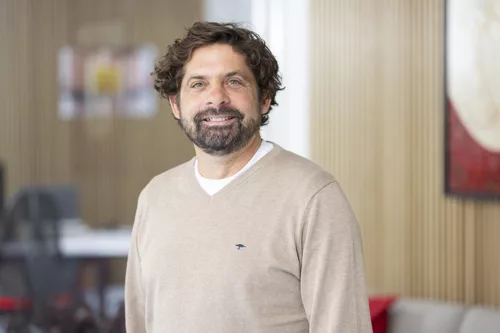
Thomas Klasmeier
Dipl.-Ing. (FH)
Thomas Klasmeier is the managing partner of the medium-sized company Klasmeier, based in Fulda. The company specializes in temperature measurement and temperature calibration, operates the DAkkS-accredited Klasmeier calibration service, and produces eXacal precision thermometers.
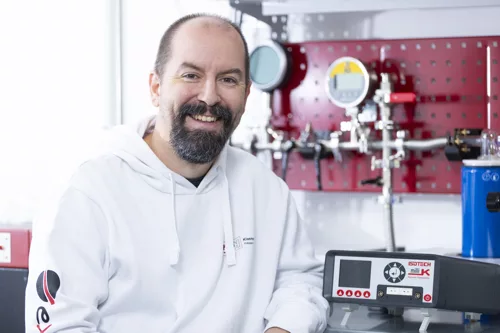
Boris Kalb
State-Certified Technician
Boris Kalb is the head of Klasmeier’s calibration laboratory and is responsible for daily operations in the temperature lab. He has gained over 20 years of professional experience at Klasmeier. As head of the calibration department, he regularly participates in the technical committee meetings of the DKD.

Optimally Connected with Klasmeier Connect
Stay connected in the community after the online seminar
All seminar participants receive access to our Klasmeier Connect Community.
With group chat and direct messages, participants can exchange ideas with other participants and instructors before, during, and after the seminar, watch recordings, and download PDFs. Access remains available even after the seminar.